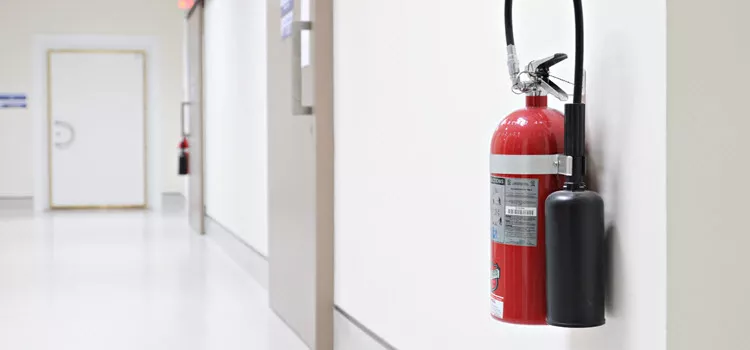
What NFPA 10 Requires for Commercial Fire Extinguisher Inspections
NFPA 10 sets the baseline standard for portable fire extinguishers in many commercial settings. It calls for extinguisher inspections at installation and then ongoing checks at regular intervals. NFPA guidance includes a monthly visual inspection schedule to confirm each unit is present, accessible, and ready for use.
In addition to the monthly check, NFPA 10 requires a more detailed annual inspection and maintenance process performed by a qualified professional. The annual service goes beyond “looks okay” and confirms the extinguisher functions properly under real emergency conditions.
If you manage multiple buildings or oversee compliance for a business, it helps to treat this as a formal program rather than a once-a-year scramble.
Monthly Checks vs. Annual Professional Inspections
Many businesses misunderstand the difference between monthly inspections and annual servicing. The monthly check is a visual inspection that your staff can complete in-house. NFPA describes it as a routine inspection that verifies basic readiness.
A monthly check generally confirms:
- Correct location
- Clear access
- No damage
- Seal intact
- Gauge normal
The annual service is different. It involves a qualified technician performing a full maintenance inspection, replacing safety seals as needed, and properly documenting the service. Texas guidance also requires annual inspections by a state-certified inspector or a licensed company. If your monthly inspections are strong but you skip annual professional service, you still fail compliance in most cases.
Commercial Fire Extinguisher Inspection Frequency in Texas
Texas businesses often ask whether state rules match NFPA 10. While requirements can vary by jurisdiction and occupancy type, Texas rules commonly require at least annual inspection by a company licensed by the State Fire Marshal.
For fire extinguisher inspection in Texas to follow compliance, you generally need both:
- Monthly checks
- Annual service
What Inspectors Look for During a Commercial Fire Extinguisher Inspection
A proper commercial fire extinguisher inspection focuses on readiness. That means the extinguisher must match the hazard, be in the correct location, and be ready for use without delay.
During annual inspections, our technicians typically check:
- Proper pressure
- Hose condition
- No corrosion
- Bracket secure
- Label readable
- Correct rating
They also confirm the extinguisher hasn’t passed service intervals that require deeper maintenance. NFPA 10 includes longer-term service requirements, such as internal maintenance at set time intervals (often 6 years for many stored-pressure models). This is the value of professional oversight. A quick glance won’t catch everything that can prevent an extinguisher from working.
Documentation and Tagging: What You Must Prove
Inspectors and fire marshals don’t just want to see extinguishers on walls. They want proof that you have maintained them. That is where documentation comes in. NFPA 10 lets you record monthly inspections on a tag, in a log, or in an approved electronic record system, as long as you can provide those records upon request. Annual maintenance documentation typically requires a service tag or label that shows the service date and the servicing company or technician’s information.
Common Compliance Failures Businesses Should Avoid
Fire extinguisher compliance issues usually come from small oversights that add up. Many businesses buy the extinguishers, mount them, and assume they are covered. Then months pass, staff changes, and nobody owns the inspection schedule. The most common failures include missing monthly documentation, expired annual service, and blocked access to the extinguisher.
Why Fire Extinguisher Inspections Matter
Inspection programs do more than “check a box.” They reduce risk. A functioning extinguisher can stop a small fire from becoming a major emergency, which protects people, reduces property loss, and minimizes business interruption. Inspections also support smoother insurance renewals and reduce headaches during fire marshal visits. When you can demonstrate consistent compliance with fire extinguisher inspection requirements, you reduce the risk of citations, re-inspections, or operational delays.
Your Safety Comes First
Choose dependable fire protection services from Kauffman
Keep Your Business Compliant With Kauffman Co.
Fire extinguisher compliance isn’t difficult, but it does require consistency. Monthly checks keep units ready and visible, while annual professional service ensures each extinguisher performs when it matters. If you need help building a reliable inspection schedule, Kauffman Co. can support your business in the Greater Houston area. We also offer Fire Alarm and Fire Hydrant services.
Schedule your next commercial fire extinguisher inspection with Kauffman Co. to stay ahead of compliance requirements.
What types of commercial buildings does Kauffman Co. service?
Kauffman Co. provides fire protection services for a wide range of commercial and industrial facilities, including office buildings, warehouses, retail centers, manufacturing plants, medical facilities, schools, data centers, restaurants, and multi-use properties. We work directly with developers, construction managers, building owners, and facility managers across Texas.
How often should commercial fire protection systems be inspected in Texas?
NFPA standards require most commercial fire protection systems to be inspected on a monthly, quarterly, semiannual, and annual schedule depending on the system type. Local AHJ requirements may mandate additional inspections. Kauffman Co. performs all required NFPA- and AHJ-compliant inspection, testing, and maintenance (ITM) to keep your facility in compliance.
Can Kauffman Co. provide both design and installation for new construction projects?
Yes. Kauffman Co. offers full design-build services, including system engineering, submittals, BIM coordination, and professional installation for new commercial construction projects. Our team ensures your fire protection system is designed to meet project specifications, NFPA standards, and local code requirements.
Do you offer emergency fire protection repairs and troubleshooting?
Yes. Kauffman Co. provides 24/7 emergency fire protection services for system failures, alarms, leaks, and other urgent issues. Our technicians can identify the cause, make on-site repairs, and help restore your system to safe operating condition.
What fire codes and standards do your services follow?
Kauffman Co. follows all applicable NFPA codes, Texas fire safety requirements, and local AHJ guidelines. Our work aligns with standards for fire sprinklers, fire suppression systems, fire alarms, portable extinguishers, and the mandated inspection/testing schedules required for commercial compliance.