NFPA 72 and What It Covers
NFPA 72 is the National Fire Alarm and Signaling Code. It sets the inspection, testing, and maintenance baseline for most commercial fire alarm systems. Your authority having jurisdiction, often the local fire marshal or fire prevention office, may add local rules, but NFPA 72 is the common starting point for schedules and methods.
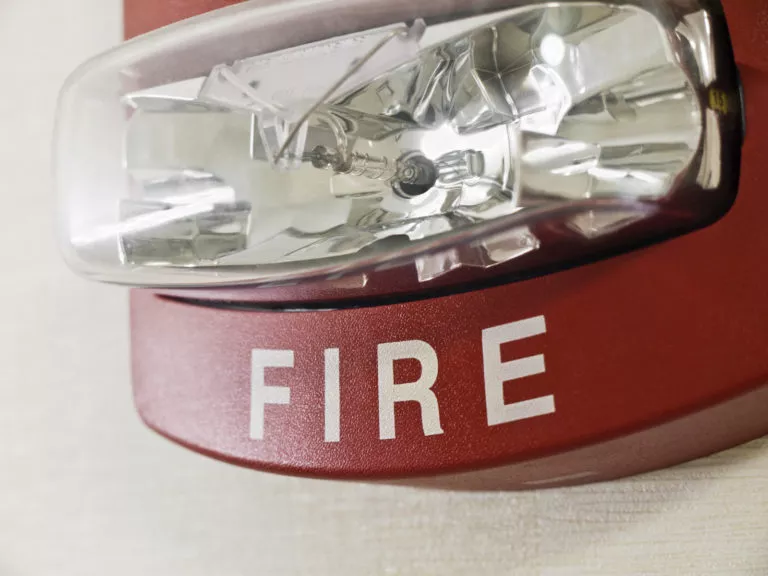
It covers the fire alarm control panel, initiating devices (like smoke and heat detectors and pull stations), notification appliances (horns, speakers, strobes), and the communication path to monitoring. It also covers many system interfaces, like elevator recall and door releases, when they are tied into the alarm sequence.
Your Safety Comes First
Choose dependable fire protection services from Kauffman
Testing Intervals Facility Managers Usually Track
Fire systems are tracked on a calendar, not a hunch. Under fire alarm testing requirements, your schedule often includes visual inspections plus functional tests. Visual checks can catch a strobe blocked by new shelving, a damaged pull station, or a panel showing trouble. Functional tests confirm that devices activate the panel, the panel runs the correct sequence, and the building receives the right notification.
NFPA 72 uses varying intervals based on component type and system design. You will see schedules broken into weekly, monthly, quarterly, semiannual, and annual activities, plus acceptance and reacceptance testing after changes. Treat nfpa 72 testing as a map. It tells you what the code expects, while your service provider and AHJ help you apply it to your building without disrupting operations. Following nfpa 72 testing guidelines ensures each device is checked correctly and the system stays compliant with code requirements.
What Gets Tested During a Visit
Most visits start at the control panel. Technicians check for active troubles, correct labeling, proper zoning or address mapping, and basic functions like reset and silence. They will also confirm that any remote annunciators are working and accessible.
Initiating devices are tested next. Smoke detectors, heat detectors, duct detectors, and pull stations are checked to confirm they activate the correct alarm or supervisory condition and report the right location. Condition matters as well. Painted detectors, dusty covers, and missing labels are common reasons a device fails a test or creates nuisance alarms.
Notification appliances are what people rely on in the moment. Horns, speakers, and strobes are tested so that you know they activate where they are supposed to. The communication side often gets verified in the same visit, since the system has to send signals reliably to a supervising station through an approved path, such as cellular, IP, or radio.
Documentation That Keeps You Compliant
Testing without records is where many facilities get stuck. Inspectors and insurers often ask for the most recent test report, the device list, noted deficiencies, and proof of correction. A commercial fire alarm test checklist helps you stay consistent across multiple panels, multiple buildings, or multi-tenant sites, since everyone can see what was tested and what still needs work.
Keep reports in one shared location and treat deficiencies like work orders with deadlines. If something could not be tested due to access limits, document the reason and schedule a follow-up. After repairs, re-test the affected components so that the record shows a clean closeout.
Deficiencies Inspectors See All the Time
Most failures come from building changes. A contractor disables a device during construction and forgets to restore it. A detector is covered for dust control and never gets cleaned or replaced. A panel stays in trouble because the signal keeps getting acknowledged instead of being solved.
Notification issues show up after layout changes, when sound paths shift, or a strobe is hidden behind signage. Communication failures can show up after IT changes, when the network no longer supports the alarm communicator settings. If you want to avoid last-minute surprises, schedule Houston fire alarm testing early enough to fix deficiencies and still have time for re-testing before official visits.
Plan Your Next Step
Fire alarm testing is a routine task that protects people, property, and your inspection record. When you stay on schedule, verify the full signal path, and keep reports organized, you avoid scrambling right before an audit. Use your commercial fire alarm test checklist each time a panel is inspected so that all deficiencies are documented and resolved consistently. At Kauffman Co., we provide Houston fire alarm testing for commercial establishments, deficiency repairs, and documentation support built around real facility schedules and access limits. Schedule your next fire alarm test with Kauffman Co. so that you can keep the system ready and the paperwork tidy.
Your Safety Comes First
Choose dependable fire protection services from Kauffman
What types of commercial buildings does Kauffman Co. service?
Kauffman Co. provides fire protection services for a wide range of commercial and industrial facilities, including office buildings, warehouses, retail centers, manufacturing plants, medical facilities, schools, data centers, restaurants, and multi-use properties. We work directly with developers, construction managers, building owners, and facility managers across Texas.
How often should commercial fire protection systems be inspected in Texas?
NFPA standards require most commercial fire protection systems to be inspected on a monthly, quarterly, semiannual, and annual schedule depending on the system type. Local AHJ requirements may mandate additional inspections. Kauffman Co. performs all required NFPA- and AHJ-compliant inspection, testing, and maintenance (ITM) to keep your facility in compliance.
Can Kauffman Co. provide both design and installation for new construction projects?
Yes. Kauffman Co. offers full design-build services, including system engineering, submittals, BIM coordination, and professional installation for new commercial construction projects. Our team ensures your fire protection system is designed to meet project specifications, NFPA standards, and local code requirements.
Do you offer emergency fire protection repairs and troubleshooting?
Yes. Kauffman Co. provides 24/7 emergency fire protection services for system failures, alarms, leaks, and other urgent issues. Our technicians can identify the cause, make on-site repairs, and help restore your system to safe operating condition.
What fire codes and standards do your services follow?
Kauffman Co. follows all applicable NFPA codes, Texas fire safety requirements, and local AHJ guidelines. Our work aligns with standards for fire sprinklers, fire suppression systems, fire alarms, portable extinguishers, and the mandated inspection/testing schedules required for commercial compliance.